
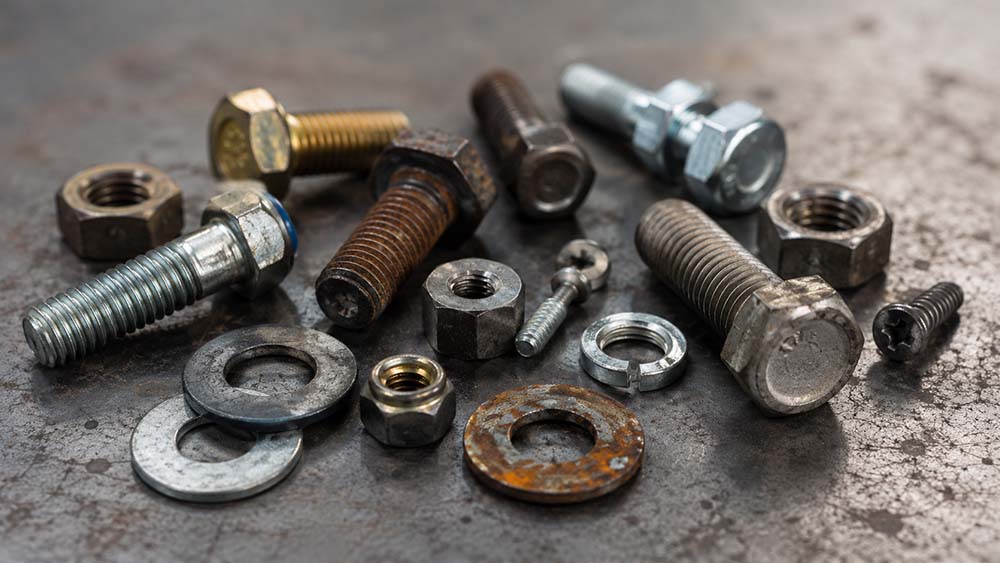
Every day, bolts, screws, nuts, washers, and other fasteners quietly hold together everything from heavy machinery and bridges to office furniture and manufacturing equipment. Most of the time, they perform flawlessly—until they don’t.
When a fastener fails, the consequences can range from inconvenient downtime to expensive repairs, damaged equipment, and serious safety hazards. The good news is that many fastener failures are preventable with the right products and proper installation.
Here are five common real-world fastener failures and the lessons they teach.
1. Corrosion That Went Unnoticed
A maintenance team discovered severe rust around several exterior mounting bolts supporting rooftop equipment. Over time, moisture and exposure to the elements had weakened the fasteners until one finally snapped during a routine inspection.
The problem was not necessarily poor workmanship. It was using the wrong fastener material or finish for the environment.
How It Could Have Been Prevented
Choosing corrosion-resistant fasteners, such as stainless steel or appropriately coated fasteners, can significantly increase service life, especially in coastal, industrial, humid, or outdoor environments.
Regular inspections can also identify corrosion before it becomes a serious structural or operational problem.
2. Overtightening During Installation
It is easy to assume that tighter is always better, but that is often not the case.
A production machine experienced repeated bolt failures shortly after routine maintenance. An inspection revealed that technicians had been using impact tools without following the manufacturer’s torque specifications. The bolts had been stretched beyond their intended limits.
How It Could Have Been Prevented
Always follow the recommended torque specifications and use calibrated torque tools when required.
Proper tightening allows a fastener to deliver the necessary clamping force without damaging the threads, stretching the bolt, or weakening the assembly.
3. The Wrong Grade Fastener Was Used
Two bolts may look nearly identical, but their strength and performance can be dramatically different.
In one case, replacement hardware was purchased based only on diameter, length, and thread pattern. The substitute bolts lacked the required strength rating and failed prematurely under normal operating loads.
How It Could Have Been Prevented
Always verify the required fastener grade, material, coating, and specifications before replacing hardware.
Matching the physical size is not enough. A fastener must also be capable of handling the load, vibration, temperature, and environmental conditions of the application.
4. Vibration Loosened Critical Hardware
Industrial equipment, heavy machinery, vehicles, and transportation systems are regularly exposed to vibration. Without an appropriate locking method, even correctly installed fasteners can gradually loosen over time.
The problem may begin as a minor rattle or alignment issue before progressing to component wear, equipment damage, or complete assembly failure.
How It Could Have Been Prevented
Depending on the application, lock washers, prevailing torque nuts, locking fasteners, thread-locking compounds, safety wire, or other retention methods may help maintain a secure assembly.
The correct solution depends on the equipment, operating conditions, maintenance requirements, and manufacturer recommendations.
5. Incompatible Metals Were Combined
A customer installed stainless steel fasteners into aluminum components that were regularly exposed to moisture. Within months, galvanic corrosion began attacking the aluminum and weakening the assembly.
Neither material was defective. The combination of dissimilar metals and moisture created the problem.
How It Could Have Been Prevented
Understanding material compatibility is essential, particularly in marine, construction, HVAC, manufacturing, automotive, and outdoor applications.
Selecting compatible materials or using appropriate coatings, washers, sealants, or isolation techniques can help prevent costly corrosion damage.
Small Parts Can Have Big Consequences
Fasteners are often among the least expensive components in an assembly, yet they can have an enormous impact on reliability, performance, and safety.
Selecting the correct fastener for the application, environment, and load requirements can help prevent equipment failures, reduce downtime, extend service life, and avoid expensive repairs.
Whether you are maintaining manufacturing equipment, building infrastructure, repairing machinery, or sourcing components for production, choosing quality fasteners is an investment in long-term performance.
Find the Right Fasteners at Allied Bolt & Screw
At Allied Bolt & Screw, we help customers find dependable fasteners and industrial hardware for a wide range of applications. From standard bolts, screws, nuts, and washers to specialty fastening products, our experienced team can help you identify solutions that meet your performance, durability, and budget requirements.
Do not wait until a fastener fails to discover that it was not the right choice. Contact Allied Bolt & Screw today to find the dependable fastening solutions your project demands.


