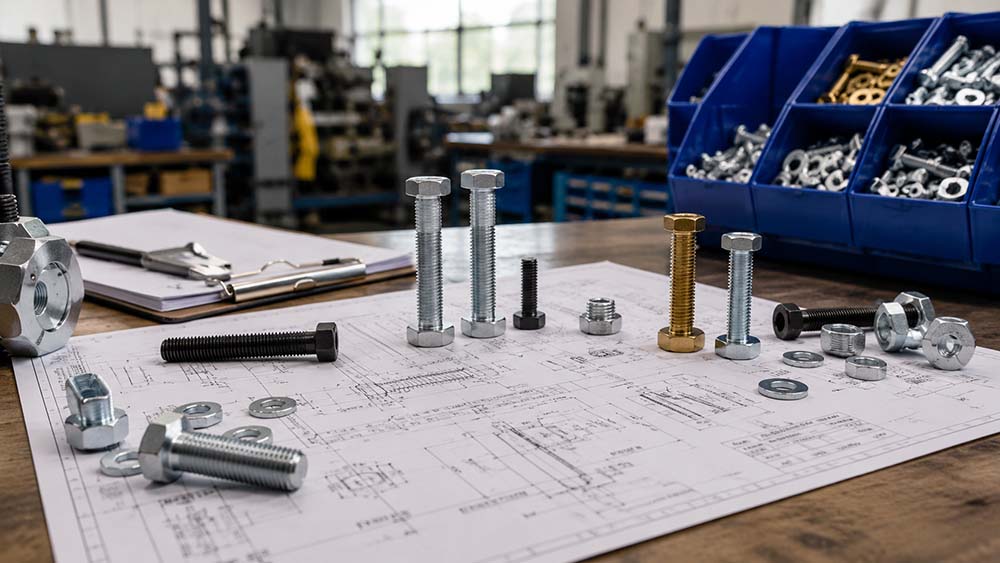
Choosing the right fastener might seem straightforward. Find the correct size, match the thread, place the order, and move on.
But in many industrial, manufacturing, construction, and maintenance applications, there is much more to consider.
The wrong bolt, screw, nut, washer, or specialty fastener can lead to premature wear, corrosion, loosening, equipment failure, costly downtime, and unnecessary replacement expenses.
Before placing your next fastener order, taking a few minutes to review the application can make a significant difference.
Start With the Application
The first question should always be: What is the fastener actually going to do?
A fastener used to hold together a lightweight enclosure has very different requirements than one securing heavy machinery, automotive components, structural equipment, or an assembly exposed to constant vibration.
Understanding the application helps determine virtually every specification that follows, including material, strength, thread type, finish, and installation method.
Consider the Load
Fasteners can experience several different types of forces.
Tensile loads pull a fastener apart along its length, while shear loads apply force across the fastener. Some applications experience both at the same time.
There may also be dynamic loads caused by vibration, repeated movement, impacts, or machinery cycling.
Choosing a fastener with the proper strength rating is essential. Using a fastener simply because it fits the hole does not necessarily mean it is strong enough for the application.
Choose the Right Material
Fasteners are available in many different materials, and each offers specific advantages.
Carbon steel is widely used for general industrial applications because of its strength and cost effectiveness. Stainless steel is frequently selected where corrosion resistance is important. Brass can be useful in electrical, plumbing, decorative, and corrosion-resistant applications, while aluminum may be appropriate where minimizing weight is important.
The materials being joined should also be considered. Combining certain dissimilar metals can contribute to galvanic corrosion, especially when moisture is present.
Think About the Environment
Where will the fastener be used?
An indoor fastener installed in a dry environment may perform reliably for decades. That same fastener could deteriorate quickly when exposed to moisture, salt air, chemicals, extreme temperatures, or outdoor conditions.
Environmental considerations can significantly influence the appropriate fastener material and finish.
Applications near saltwater or in coastal environments, for example, may require considerably more corrosion resistance than equipment used inside a climate-controlled facility.
Get the Thread Right
Thread specifications are one of the easiest areas to overlook and one of the most important to get right.
Fasteners may use coarse threads, fine threads, metric threads, or specialized thread configurations.
Even fasteners that appear nearly identical can have different thread pitches.
Using an incorrect thread can damage mating components, reduce holding strength, create installation problems, and potentially make the assembly unusable.
Always verify diameter, thread pitch, length, and thread type before ordering.
Select the Appropriate Finish or Coating
Fastener finishes are not merely cosmetic.
Zinc plating, galvanizing, black oxide, phosphate coatings, and other finishes can provide varying degrees of corrosion protection, lubrication, wear resistance, and appearance.
The proper coating depends on the environment and the intended use.
When specifying a fastener, consider whether the coating must withstand moisture, chemicals, temperature changes, outdoor exposure, or repeated installation and removal.
Don’t Overlook the Head and Drive Style
The way a fastener will be installed should also influence your selection.
Hex heads, socket heads, Phillips drives, slotted drives, Torx-style drives, and other configurations each offer different advantages.
Installation space can also be an important consideration. A fastener that works perfectly on a blueprint may be difficult to tighten if surrounding components prevent a wrench or driver from reaching it.
Thinking about installation before ordering can prevent frustration once the parts reach the shop floor or jobsite.
Make Sure the Length Is Correct
A fastener that is too short may not provide sufficient thread engagement. One that is too long can interfere with surrounding components or create unnecessary installation problems.
Proper thread engagement is particularly important in applications where strength and reliability are critical.
Dimensions should be confirmed rather than estimated whenever possible.
Consider How the Fastener Will Be Installed
Installation methods can have a major impact on fastener performance.
Torque specifications, locking devices, thread-locking compounds, washers, lock nuts, and other components may be necessary to keep an assembly secure.
Applications exposed to vibration deserve particular attention because improperly secured fasteners can gradually loosen during operation.
Think Beyond the Individual Fastener
A bolt rarely works alone.
Nuts, flat washers, lock washers, spacers, anchors, retaining hardware, and other components often form part of the complete fastening system.
It is important to evaluate the entire assembly rather than selecting each component independently.
The strongest bolt in the world will not solve a problem if the nut, washer, mating material, or installation method is unsuitable for the application.
Know Your Quantity Requirements
Quantity can affect more than pricing.
Understanding anticipated usage can help determine packaging requirements, inventory levels, reorder schedules, and whether a standard or specialty fastener makes the most sense.
For manufacturers and businesses with recurring needs, planning ahead can also help reduce downtime caused by running out of critical hardware.
When in Doubt, Ask Before You Order
A fastener may be one of the smallest components in an assembly, but its importance should never be underestimated.
Specifications that seem minor on paper can make a major difference in real-world performance.
That is why working with an experienced fastener supplier can be valuable. Instead of simply matching a part number, a knowledgeable supplier can help identify important questions before the wrong product reaches your facility or jobsite.
The Right Fastener Starts With the Right Specification
Before ordering, review the application, load requirements, material, environment, thread, finish, dimensions, installation method, and quantity.
A little extra attention during the specification process can help improve reliability, simplify installation, reduce maintenance, and prevent costly problems later.
At Allied Bolt & Screw, we understand that the right fastener is about more than simply finding something that fits. Our team can help you identify the fastening products that meet the demands of your application.
Need help sourcing bolts, screws, nuts, washers, or specialty fasteners? Contact Allied Bolt & Screw to discuss your requirements.