
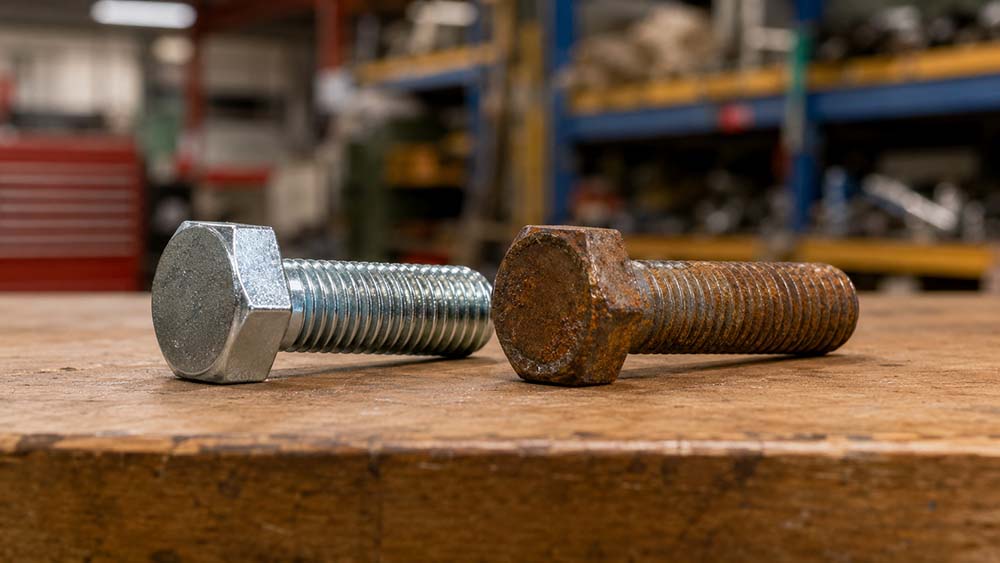
Many bolts look virtually identical at first glance. They may have the same diameter, the same length, and even the same thread pattern. To the untrained eye, they appear interchangeable.
In reality, two bolts that look exactly alike can have dramatically different strength, durability, corrosion resistance, and performance. Choosing the wrong one can lead to equipment failure, costly downtime, damaged machinery, or serious safety hazards.
At Allied Bolt & Screw, we have helped customers find the right fasteners for decades. Understanding what separates one bolt from another can save both time and money.
Appearance Does Not Tell the Whole Story
A bolt’s performance depends on much more than its size.
Important differences can include:
- Material composition
- Strength grade
- Heat treatment
- Protective coating
- Manufacturing tolerances
- Intended application
Two bolts may fit the same hole, but only one may be engineered for the job.
Strength Grades Matter
One of the biggest differences between bolts is their strength grade.
- Grade 2 bolts are suitable for many general-purpose applications.
- Grade 5 bolts provide greater tensile strength and are commonly used in automotive and machinery applications.
- Grade 8 bolts are designed for heavy-duty industrial equipment where maximum strength is critical.
Using a lower-grade bolt where a higher-grade fastener is required can result in stretching, thread failure, or complete breakage under load.
Using an unnecessarily high-grade bolt is not always the right choice either. Different applications require different mechanical properties, and the strongest bolt is not automatically the best bolt for every job.
Material Makes a Major Difference
Bolts are manufactured from a variety of materials, including:
- Carbon steel
- Alloy steel
- Stainless steel
- Brass
- Silicon bronze
- Specialty alloys
Each material offers different advantages.
- Stainless steel provides excellent corrosion resistance.
- Alloy steel offers exceptional strength.
- Brass resists corrosion and is non-sparking.
- Silicon bronze performs well in marine and outdoor environments.
Selecting the proper material depends on where the fastener will be used, what it will be exposed to, and how much load it must support.
Coatings Can Extend Service Life
Protective finishes are another major factor in bolt performance.
Common coatings and finishes include:
- Zinc plating
- Hot-dip galvanizing
- Black oxide
- Mechanical galvanizing
- Zinc flake coatings
These finishes can protect against corrosion, reduce wear, and improve service life.
Choosing the wrong coating can significantly shorten a fastener’s lifespan, especially in outdoor, marine, industrial, or chemical environments.
Heat Treatment Changes Performance
Two bolts made from similar materials may perform differently because of how they were heat-treated during manufacturing.
Heat treatment can affect:
- Hardness
- Tensile strength
- Ductility
- Wear resistance
- Resistance to fatigue
A properly heat-treated bolt can withstand demanding loads and repeated stress. A poorly treated or incorrectly specified fastener may become brittle, stretch, or fail prematurely.
Thread Quality and Tolerances Matter
Even small differences in thread dimensions can affect how securely a bolt fits and how evenly it distributes force.
High-quality industrial fasteners are manufactured to precise tolerances that help ensure:
- Accurate thread dimensions
- Consistent fit
- Proper load distribution
- Reliable tightening
- Reduced risk of stripping or loosening
Inferior fasteners may have rough threads, inconsistent dimensions, hidden defects, or lower-than-advertised strength ratings. These problems are not always visible until the fastener is installed or placed under load.
Head Markings Can Reveal Important Information
The markings on the head of a bolt can provide valuable information about its grade, strength, and manufacturer.
For example, radial lines are commonly used on certain SAE bolts to identify the fastener grade. A bolt with no visible markings may have very different performance characteristics from one with recognized grade markings.
Head markings should not be ignored. They can help buyers, technicians, and maintenance professionals confirm that the bolt matches the requirements of the application.
Corrosion Resistance Is Not the Same as Strength
A common mistake is assuming that a corrosion-resistant bolt is automatically stronger than a standard steel bolt.
Stainless steel may offer excellent rust resistance, but its strength characteristics can differ from those of hardened alloy steel. Similarly, a high-strength bolt may perform well under heavy loads but require additional protection in a wet or corrosive environment.
The right choice depends on balancing strength, corrosion resistance, temperature exposure, and the surrounding materials.
The Cost of Choosing the Wrong Bolt
Using an incorrect fastener can lead to:
- Equipment downtime
- Costly repairs
- Production delays
- Increased maintenance
- Safety risks
- Premature component failure
- Damage to surrounding equipment
What appears to be a small cost-saving decision can quickly become an expensive mistake.
The cost of the bolt itself is often minor compared with the labor, downtime, replacement parts, and potential liability associated with a fastener failure.
How Allied Bolt & Screw Helps
Choosing the correct fastener is not always straightforward.
The experienced team at Allied Bolt & Screw helps customers identify the proper bolt based on:
- Application requirements
- Load capacity
- Environmental conditions
- Corrosion resistance
- Industry standards
- Material compatibility
- Temperature exposure
- Thread and dimensional requirements
Whether you need standard industrial fasteners or hard-to-find specialty hardware, Allied Bolt & Screw can help ensure you receive the right product for the job.
Do Not Judge a Bolt by Its Appearance
Two bolts may look identical sitting side by side, but their real differences become apparent when they are put to work.
Understanding strength grades, materials, coatings, heat treatment, thread quality, and manufacturing standards helps keep equipment safe, reliable, and built to last.
If you are unsure which fastener is right for your application, Allied Bolt & Screw has the experience, product knowledge, and inventory to help you make the right choice.
Contact Allied Bolt & Screw today to speak with our knowledgeable team and find the industrial fasteners your project demands.


