Not all bolts are created equal. While many fasteners may look similar on the outside, the strength, durability, and intended applications can vary significantly. Two of the most common choices in industrial and commercial applications are Grade 5 and Grade 8 bolts.
Choosing the correct bolt isn’t just about getting the job done – it’s about ensuring safety, maximizing performance, and preventing costly equipment failures. Here’s what you need to know before selecting the right fastener for your next project.
What Is a Bolt Grade?
A bolt’s grade identifies its strength and mechanical properties. Higher-grade bolts are manufactured from stronger alloy steels and undergo additional heat treatment to increase tensile strength and durability.
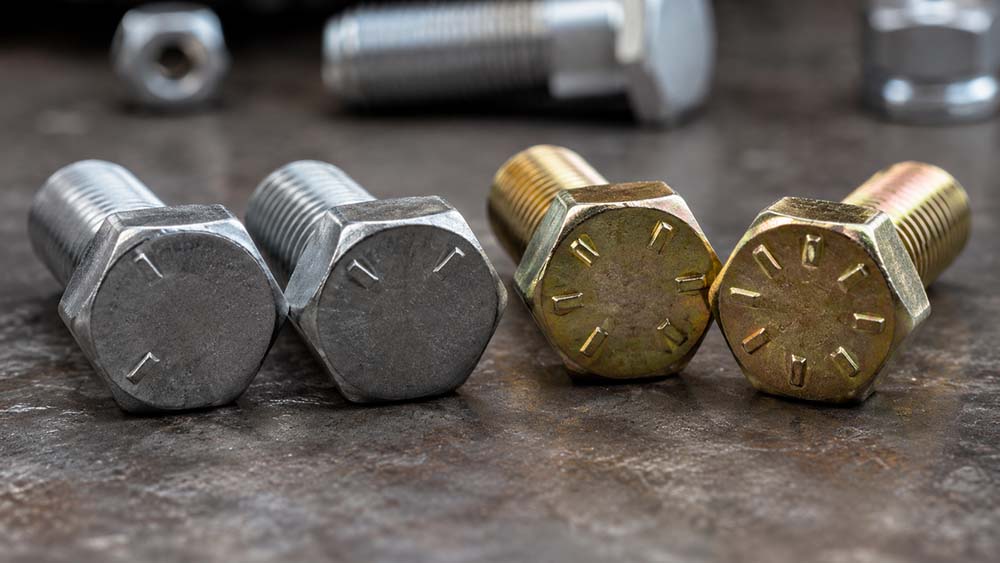
In the United States, SAE bolt grades are commonly identified by markings on the head of the bolt.
- Grade 5: Three radial lines
- Grade 8: Six radial lines
These markings make it easy to identify the bolt even after installation.
Grade 5 Bolts
Grade 5 bolts are manufactured from medium-carbon steel and are heat treated to provide an excellent balance between strength, flexibility, and affordability.
Typical applications include:
- Automotive repairs
- Agricultural equipment
- Construction
- General machinery
- Industrial maintenance
- Light manufacturing
Grade 5 bolts provide excellent performance for most everyday industrial applications without the added cost of higher-strength fasteners.
Advantages of Grade 5 Bolts
- More economical
- Good tensile strength
- Slightly more flexible under stress
- Suitable for most commercial applications
- Widely available in many sizes and finishes
Grade 8 Bolts
Grade 8 bolts are manufactured from medium-carbon alloy steel and receive additional heat treatment, making them significantly stronger than Grade 5 bolts.
They’re designed for demanding applications where heavy loads, vibration, and high stress are common.
Typical applications include:
- Heavy equipment
- Industrial machinery
- Suspension components
- Construction equipment
- Manufacturing plants
- High-performance automotive applications
Advantages of Grade 8 Bolts
- Higher tensile strength
- Greater resistance to stretching
- Excellent under heavy loads
- Better for high-vibration environments
- Longer service life in demanding applications
Grade 5 vs. Grade 8: At a Glance
| Feature | Grade 5 | Grade 8 |
|---|---|---|
| Head Markings | 3 radial lines | 6 radial lines |
| Material | Medium-carbon steel | Alloy steel |
| Heat Treated | Yes | Yes (higher specification) |
| Strength | High | Very High |
| Cost | Lower | Higher |
| Best For | General industrial use | Heavy-duty applications |
Should You Always Choose Grade 8?
Not necessarily. Many people assume that stronger is always better, but using a Grade 8 bolt where it isn’t needed can increase project costs without providing additional benefits.
In some applications, a slightly more flexible Grade 5 bolt may actually perform better by absorbing shock loads rather than transferring them to surrounding components.
The best choice depends on load requirements, vibration, environmental conditions, manufacturer specifications, and safety requirements.
Don’t Forget the Matching Hardware
For maximum performance, bolts should always be paired with compatible nuts and washers designed for the same strength rating.
Using a lower-grade nut with a higher-grade bolt can reduce the overall strength of the assembly and create a potential failure point.
Let Allied Bolt & Screw Help You Choose the Right Fastener
Selecting the correct fastener can make all the difference in the performance and safety of your project. Whether you’re maintaining heavy equipment, building machinery, or completing everyday repairs, Allied Bolt & Screw can help you find exactly what you need. Contact Us Today for assistance.
BUY NOW »