
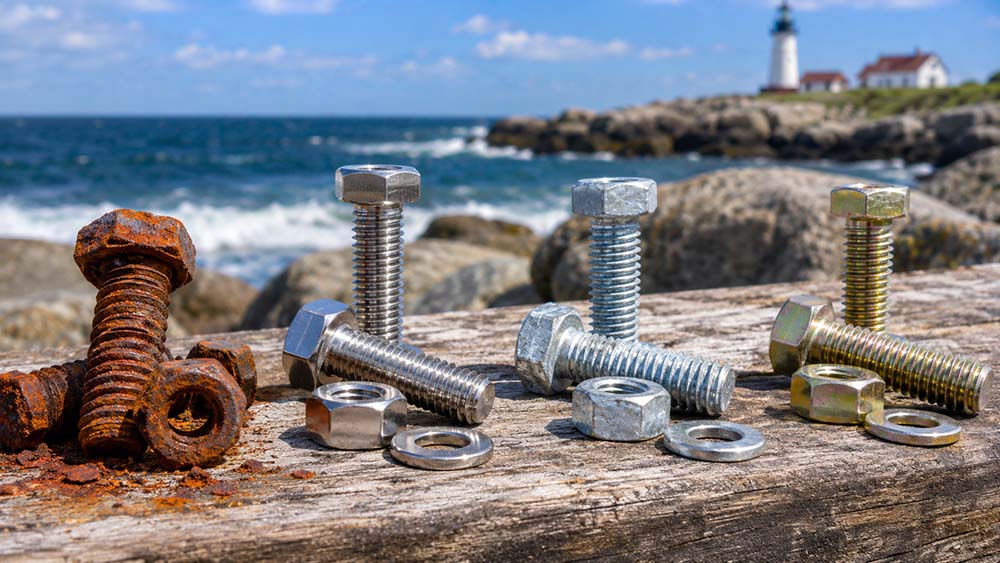
A bolt may look like a small part of a much larger project, but when corrosion takes hold, that small component can become a big problem. Rusted screws, deteriorating nuts, and weakened bolts can lead to equipment failures, expensive repairs, safety concerns, and premature replacement of otherwise functional assemblies.
Whether you’re building outdoor structures, maintaining industrial equipment, working in coastal environments, or managing a manufacturing operation, choosing corrosion-resistant fasteners is an important part of protecting your investment.
At Allied Bolt & Screw, we understand that selecting the right fastener means considering more than size and strength. The environment where that fastener will be used matters just as much.
1. Why Do Fasteners Corrode?
Corrosion occurs when a metal reacts with its surrounding environment. For steel fasteners, exposure to moisture and oxygen can lead to rust, a form of corrosion that gradually damages the metal.
Several conditions can accelerate this process:
- Moisture and humidity: Water exposure increases the likelihood of corrosion, particularly when surfaces remain damp.
- Salt exposure: Coastal air and road deicing salts can accelerate deterioration.
- Chemical exposure: Cleaning agents, industrial chemicals, and certain processing environments may attack fastener materials or protective coatings.
- Temperature changes: Repeated heating and cooling can contribute to condensation and changing environmental conditions.
- Contact between dissimilar metals: Certain metal combinations can create galvanic corrosion when moisture is present.
Understanding these conditions is the first step toward choosing fasteners that will perform reliably over time.
2. Stainless Steel vs. Galvanized vs. Zinc-Plated Fasteners
Not all corrosion-resistant fasteners offer the same protection. Three common options are stainless steel, galvanized steel, and zinc-plated steel.
Stainless Steel Fasteners
Stainless steel contains chromium, which forms a protective passive layer on the metal’s surface. This layer helps resist corrosion under many conditions.
Stainless steel fasteners are commonly used in:
- Outdoor construction and architectural applications
- Food processing equipment
- Marine and coastal environments
- Applications exposed to moisture and humidity
Common stainless steel grades include 304 and 316. Grade 316 generally offers better resistance to chloride-related corrosion, making it a frequent choice for demanding coastal and marine environments.
However, stainless steel is not completely immune to corrosion. Material grade, environmental exposure, and installation conditions still matter.
Hot-Dip Galvanized Fasteners
Hot-dip galvanizing applies a protective zinc coating to steel. The zinc acts as a barrier and provides sacrificial protection, helping protect the underlying steel when the coating experiences limited damage.
Hot-dip galvanized fasteners are commonly used in:
- Outdoor construction
- Utility installations
- Fencing and structural connections
- Infrastructure exposed to weather
Coating thickness, manufacturing standards, and compatibility with mating nuts and washers are important considerations.
Zinc-Plated Fasteners
Zinc plating provides a protective coating that can be useful for many indoor applications and controlled environments.
These fasteners are commonly found in:
- Indoor equipment assemblies
- Furniture and fixtures
- General manufacturing
- Applications with limited moisture exposure
Standard zinc plating generally provides less long-term protection in aggressive outdoor environments than properly specified hot-dip galvanizing.
The takeaway: The best fastener material or coating depends on the actual exposure conditions, required strength, expected service life, and applicable specifications.
3. The Hidden Costs of Corrosion
Corrosion is more than a cosmetic issue. When fasteners deteriorate, the consequences can extend throughout an entire assembly or operation.
Potential problems include:
- Reduced structural reliability: Severe corrosion can reduce a fastener’s effective cross-section and load-carrying capacity.
- Difficult maintenance: Corroded fasteners may seize, making removal time-consuming or damaging surrounding components.
- Unexpected downtime: Equipment repairs can become more complicated when fasteners cannot be safely removed or reused.
- Higher replacement costs: Premature deterioration may require replacing both fasteners and connected components.
- Safety concerns: Corrosion in critical connections can compromise equipment or structural performance.
Choosing an appropriate fastener at the beginning of a project can help reduce these risks and support more predictable maintenance costs.
4. Why New England Weather Makes Fastener Selection Especially Important
Businesses throughout Massachusetts and New England face environmental conditions that can be particularly challenging for metal components.
Winter road salt, coastal moisture, freezing temperatures, snow, rain, and seasonal temperature fluctuations all influence how fasteners perform over time.
Consider an outdoor installation near Boston Harbor. Fasteners exposed to salt-laden air may require different corrosion protection than similar fasteners installed inside a climate-controlled warehouse.
Likewise, bolts used on equipment exposed to winter road spray may need additional protection compared with components operating in dry indoor environments.
These differences highlight why choosing fasteners based solely on price or appearance can be a costly mistake.
5. Galvanic Corrosion: When Two Metals Don’t Work Well Together
One often-overlooked cause of fastener deterioration is galvanic corrosion.
This occurs when dissimilar metals are electrically connected in the presence of an electrolyte, such as water containing dissolved salts. Under the right conditions, the less noble metal can corrode more rapidly.
For example, installing stainless steel fasteners in an aluminum assembly without considering galvanic compatibility may increase the risk of corrosion in the aluminum, particularly in wet or salty environments.
Potential preventive measures include:
- Choosing compatible materials
- Using appropriate insulating washers or sleeves
- Applying suitable protective coatings
- Designing connections to minimize trapped moisture
- Following applicable engineering and manufacturer recommendations
Material compatibility is an important part of selecting a fastening system that will perform over the long term.
6. Five Questions to Ask Before Choosing Corrosion-Resistant Fasteners
Before purchasing fasteners for your next project, consider these five questions:
- Will the fasteners be used indoors or outdoors? Environmental exposure can dramatically affect corrosion risk.
- Will they encounter salt, chemicals, or frequent moisture? Aggressive conditions may require specialized materials or coatings.
- What strength and performance requirements must they meet? Corrosion resistance should never come at the expense of required mechanical performance.
- What materials will the fasteners contact? Dissimilar metals may introduce galvanic corrosion concerns.
- How long must the assembly remain in service? Expected service life and maintenance accessibility can influence the most economical choice.
Answering these questions can help narrow the options and prevent expensive material-selection mistakes.
7. The Right Fastener Is an Investment in Long-Term Performance
It’s tempting to view fasteners as interchangeable commodities. After all, two bolts may have identical dimensions and look nearly the same.
But differences in material composition, coating, manufacturing standards, and environmental suitability can have a significant impact on long-term performance.
A fastener that costs slightly more upfront may offer better overall value when it helps avoid premature replacement, maintenance complications, and operational interruptions.
The goal isn’t necessarily to purchase the most expensive fastener. It’s to select the right fastener for the application.
Count on Allied Bolt & Screw for Your Fastener Needs
From everyday screws and bolts to specialized fastening requirements, Allied Bolt & Screw understands the importance of selecting components that meet your project’s needs.
Whether you’re sourcing fasteners for construction, manufacturing, maintenance, or industrial applications, working with a knowledgeable supplier can make the purchasing process easier and more efficient.
Don’t let corrosion become an expensive surprise. Contact Allied Bolt & Screw to discuss your fastener requirements and explore solutions suited to your application.


