
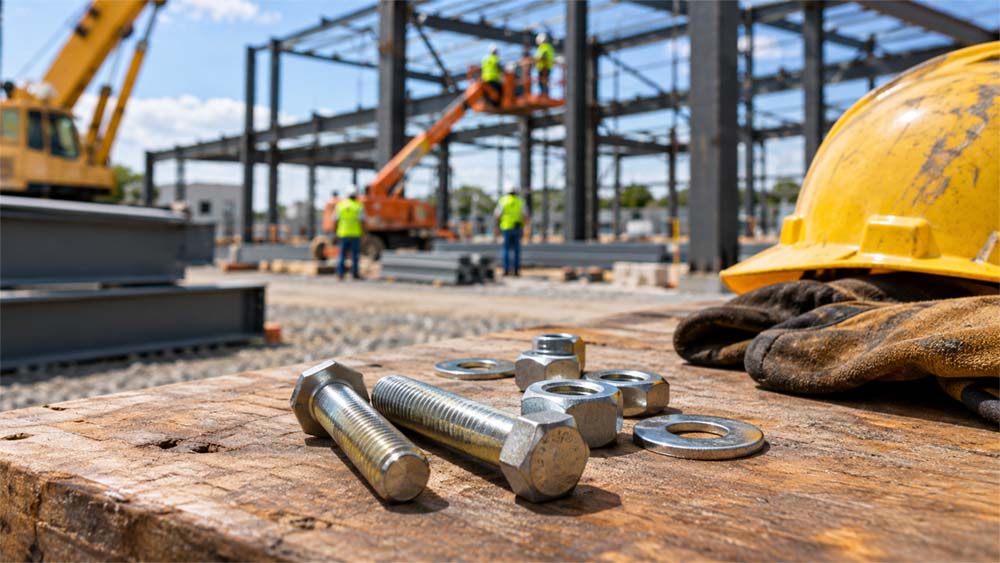
How a Missing $1 Part Can Bring a $25,000 Project to a Standstill
Imagine this: A construction crew arrives at a job site early Monday morning. The equipment is ready, the materials have been delivered, and the schedule is tight. Everything is in place for a productive day.
Except for one thing.
A specific bolt needed to complete a critical installation is missing.
It’s a part that might cost just a dollar or less. But without it, the crew can’t move forward. Workers are standing around, equipment sits idle, and someone is scrambling to locate the correct replacement.
Suddenly, that inexpensive fastener has become the most expensive component on the job.
Small Parts, Big Consequences
When businesses think about expensive project delays, they typically picture major equipment failures, labor shortages, or supply chain disruptions. Rarely does a missing screw, nut, washer, or bolt come to mind.
Yet industrial fasteners are essential to virtually every construction, manufacturing, and maintenance operation.
One missing component can prevent an assembly from being completed, delay the installation of expensive equipment, or stop a production line from operating.
And the real expense isn’t the price of the missing hardware. It’s everything that happens while people wait for it.
The Hidden Costs of Missing Hardware
Consider what happens when a crew of six workers, each costing a company $50 per hour in labor and associated expenses, must wait three hours for a replacement part.
That’s $900 in labor costs alone.
Add potential equipment downtime, delivery charges, scheduling complications, and the impact on other trades waiting to begin their work, and the total can climb quickly.
In a manufacturing environment, the consequences can be even more significant. A missing fastener may interrupt an assembly process, delay shipments, or create expensive production bottlenecks.
It’s an important reminder that the purchase price of a component and its actual cost to a business are two very different things.
Why the Cheapest Fastener Isn’t Always the Best Value
Purchasing departments are understandably focused on controlling costs. But choosing fasteners based solely on price can sometimes create larger expenses down the road.
Quality, availability, specifications, and supplier reliability all matter.
A lower-priced fastener that doesn’t meet the necessary requirements can lead to installation problems, premature failure, or costly rework.
Likewise, a supplier offering a slightly lower price isn’t necessarily the better choice if obtaining replacement inventory becomes difficult when demand increases.
Smart purchasing decisions consider the total cost of ownership, not simply the amount printed on an invoice.
Preparation Beats Emergency Purchasing
Anyone who has worked in construction or manufacturing knows that emergency purchasing is rarely efficient.
When a needed component isn’t available, employees may spend valuable time contacting suppliers, searching catalogs, arranging special deliveries, or driving to multiple locations.
These activities take people away from their primary responsibilities and introduce unnecessary uncertainty into the schedule.
A more effective approach begins with understanding which fasteners are essential to daily operations and planning inventory accordingly.
Businesses can reduce the likelihood of unexpected shortages by:
- Identifying frequently used and mission-critical fasteners.
- Maintaining appropriate inventory levels for essential components.
- Reviewing purchasing patterns to anticipate upcoming demand.
- Verifying specifications before placing orders.
- Developing relationships with dependable industrial hardware suppliers.
Not every fastener needs to be purchased in enormous quantities. The goal is to have the right components available when they are needed.
A Reliable Supplier Is Part of Your Productivity Strategy
There’s a reason successful businesses value long-term relationships with dependable suppliers.
Reliable sourcing helps purchasing managers plan with confidence, maintenance teams respond quickly, and contractors keep their projects moving.
Working with an experienced industrial fastener supplier also makes it easier to identify appropriate hardware, understand product options, and coordinate purchasing requirements.
These benefits may not always appear as individual line items on a financial statement, but they can make a meaningful difference in day-to-day operations.
Allied Bolt & Screw: Helping Keep Business Moving
At Allied Bolt & Screw, we understand that fasteners may be small, but their importance to your operation is anything but.
Whether you’re sourcing hardware for construction, manufacturing, maintenance, or ongoing production needs, having a knowledgeable supplier makes a difference.
Our goal is to help customers find the right fastening solutions for their applications while making the purchasing process as straightforward as possible.
Because the best time to think about the fasteners your business needs isn’t when a project has already stopped.
It’s before the work begins.
Don’t Let a Small Part Become a Big Problem
In business, it’s not always the biggest components that matter most. Sometimes, keeping an entire operation moving comes down to having the right bolt, screw, or fastener at exactly the right moment.
Need industrial fasteners or hardware for an upcoming project? Contact Allied Bolt & Screw to explore your options.


