When purchasing industrial fasteners, it’s tempting to focus on price. After all, how much difference can there really be between two bolts that look identical?
Sometimes, the answer is thousands of dollars.
The most expensive fastener isn’t necessarily the one with the highest price tag. It’s the one that seems to do its job until something goes wrong.
At Allied Bolt & Screw, we understand that the smallest components can have the biggest impact on an operation. Choosing the right fastener isn’t just about holding two pieces together. It’s about protecting equipment, maintaining productivity, and avoiding costly problems down the road.
When “Close Enough” Becomes a Costly Mistake
Imagine a manufacturing facility replacing a worn fastener on a critical piece of equipment.
The maintenance team finds a replacement bolt with the correct diameter and length. It fits perfectly, tightens securely, and the machine returns to service.
Problem solved, right?
Not necessarily.
What if the replacement bolt has a lower strength grade than the original? What if its coating isn’t suitable for the operating environment? What if repeated vibration gradually loosens the connection?
The equipment may run normally for weeks or months before the problem becomes apparent.
And when it does, the cost of that inexpensive replacement bolt could include equipment damage, production downtime, emergency repairs, and lost revenue.
A fastener that fits isn’t always a fastener that’s right for the job.
Five Hidden Costs of Choosing the Wrong Fastener
1. Unexpected Equipment Downtime
In industrial environments, downtime is expensive.
A failed fastener can bring an entire production line to a halt. While the replacement part itself might cost pennies, the resulting interruption can cost hundreds or thousands of dollars.
Proper fastener selection helps reduce the risk of preventable failures and keeps operations running smoothly.
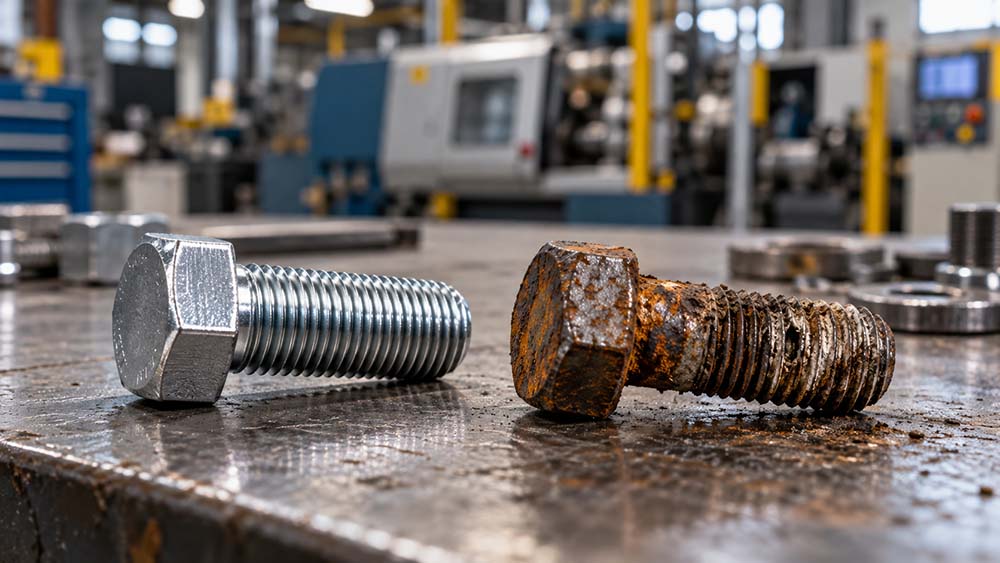
2. Premature Corrosion
Not every fastener is designed to withstand the same conditions.
Exposure to moisture, chemicals, salt, or extreme temperatures can significantly affect performance.
For example, a fastener that performs well in a controlled indoor environment may deteriorate rapidly when exposed to harsh outdoor conditions.
Selecting the appropriate material and protective finish can extend service life and reduce maintenance requirements.
3. Increased Maintenance Expenses
Using the wrong fastener can create recurring problems.
Loose connections, damaged threads, premature wear, and repeated replacements all consume valuable maintenance resources.
Over time, the labor involved in repeatedly fixing the same issue can far exceed the cost of selecting the correct hardware initially.
4. Safety and Liability Risks
Fasteners play a critical role in maintaining the structural integrity and safe operation of equipment, machinery, and assemblies.
A failure in a critical application can create serious safety hazards.
That’s why specifications such as strength, material, thread type, and applicable industry standards should never be treated as minor details.
For safety-critical applications, fasteners must meet the requirements established by the equipment manufacturer or qualified engineering professionals.
5. Supply Chain Disruptions
Sometimes the problem isn’t the fastener itself. It’s the inability to obtain the correct replacement when needed.
Businesses that rely on unusual sizes, specialized materials, or inconsistent suppliers may experience unnecessary delays.
Working with an experienced industrial fastener supplier can help companies identify appropriate products and develop more dependable purchasing strategies.
The Real Cost Is More Than the Purchase Price
Consider two hypothetical fastener options:
- Option A: $0.18 per fastener
- Option B: $0.27 per fastener
For an order of 1,000 pieces, Option A saves $90.
On paper, that looks like a smart purchasing decision.
But suppose Option A doesn’t meet the application’s required specifications and contributes to a failure that results in four hours of production downtime.
Suddenly, that $90 savings looks insignificant.
The lesson isn’t that more expensive fasteners are always better. They’re not.
The lesson is that the right fastener delivers value through reliable performance, not simply a lower purchase price.
What Should You Consider Before Ordering?
Before purchasing industrial fasteners, businesses should evaluate several important factors.
- Material: Is the fastener suitable for the environment and the materials being joined?
- Strength: Does it meet the required load and performance specifications?
- Corrosion resistance: Will it withstand exposure to moisture, chemicals, or other environmental conditions?
- Thread compatibility: Are the thread size, pitch, and configuration correct?
- Application requirements: Will the fastener experience vibration, temperature fluctuations, or repeated loading?
- Industry standards: Does the product meet the applicable specifications and certification requirements?
Answering these questions before placing an order can prevent costly mistakes later.
Why Supplier Experience Matters
Industrial fasteners may seem like simple products, but the number of available materials, sizes, grades, finishes, and configurations makes proper selection more complicated than many buyers realize.
An experienced supplier can help customers navigate these options and identify products that meet their purchasing requirements.
At Allied Bolt & Screw, we believe that supplying industrial hardware means more than filling an order.
It means helping customers find dependable products, avoid unnecessary complications, and keep their operations moving forward.
Whether you’re purchasing fasteners for manufacturing, construction, equipment maintenance, or another industrial application, having a knowledgeable supplier makes a difference.
Don’t Let a Small Part Create a Big Problem
The next time you’re comparing fastener prices, consider what you’re really buying.
You’re not simply purchasing a bolt, screw, nut, or washer.
You’re purchasing a component that contributes to the reliability of your equipment, the efficiency of your operation, and potentially the safety of the people who depend on it.
A few cents saved today should never create thousands of dollars in problems tomorrow.
The most expensive fastener isn’t always the one that costs the most. Sometimes, it’s the one that almost works.
Need the Right Fasteners for Your Next Project?
At Allied Bolt & Screw, we’re committed to helping businesses find the industrial fasteners and hardware they need.
Whether you’re sourcing standard fasteners, specialty hardware, or products for ongoing maintenance and manufacturing requirements, our team is ready to assist.
Contact Allied Bolt & Screw today to discuss your fastener and industrial hardware needs.